


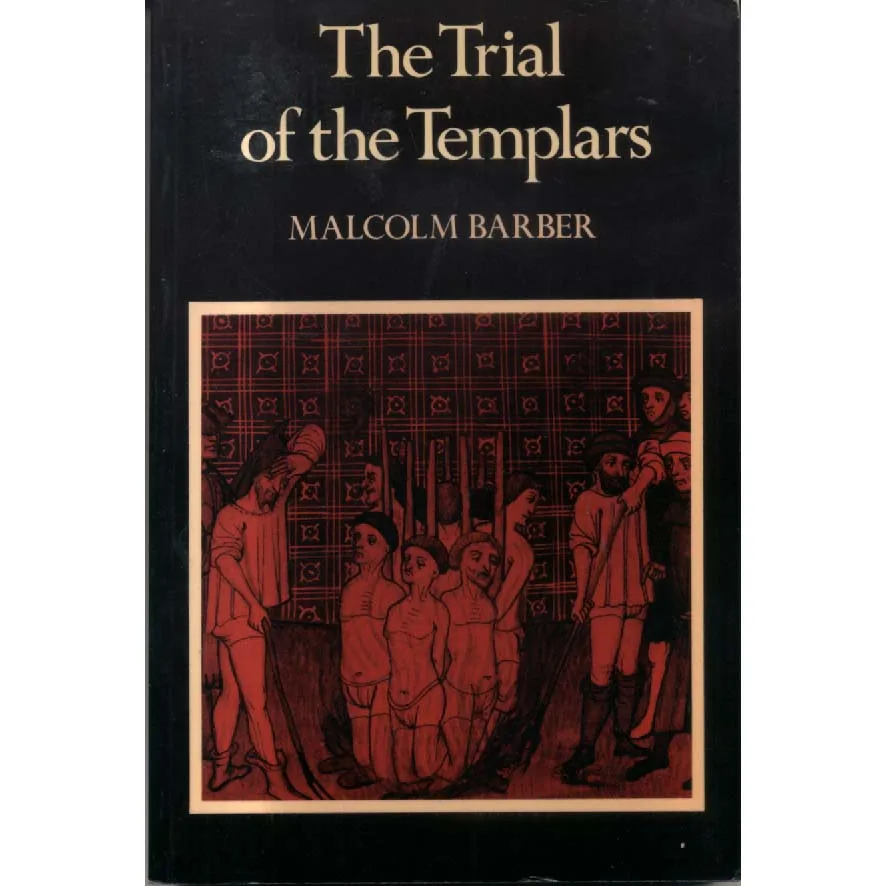
The Trial Of The Templars
Publisher: Cambridge University Press
Format: Paperback
ISBN: 0521280184
Malcolm Barber’s The Trial of the Templars is about that unhappy moment when being enormously wealthy, internationally connected, militarily prestigious and answerable mainly to God turned out to be a rather poor long-term security plan. The Knights Templar had spent centuries cultivating an image of holy discipline, crusading purpose and banking efficiency, only to discover that a medieval king with debts and imagination could make even sanctity look suspicious.
In 1307, Philip IV of France moved against the Order with the sort of decisiveness that suggests either moral outrage or financial desperation wearing a nice cloak. The Templars were arrested, interrogated and accused of heresy, blasphemy, obscene rituals and other charges so convenient they practically arrived pre-folded. The result was one of the great show trials of the Middle Ages: part religious crisis, part political ambush, part asset seizure with incense.
Barber’s book digs into the machinery of the case: the accusations, confessions, papal hesitation, royal pressure, inquisitorial procedure, prison, torture, propaganda and the final destruction of an order that had once seemed almost immovable. This is not the Templars as modern conspiracy wallpaper, forever being dragged into novels whenever someone needs a secret passage and a cup with feelings. This is the documented, legal, political and religious disaster itself, which is quite dramatic enough without anyone hiding a password in a stained-glass window.
The great irony is that the Templars were destroyed not on the battlefield, but by paperwork. After all the campaigns, fortresses, vows, swords, horses, crosses and solemn oaths, the real blade came in the form of depositions, inquiries, seals, commissions, bulls and signed statements extracted under conditions that would not pass even the most relaxed customer-service review. Medieval power knew how to dress brutality in procedure, and this book is very good on the tailoring.
There is something wonderfully bleak about watching an institution built for holy war collide with monarchy, debt and bureaucracy. The Templars had helped invent a kind of international financial network; Philip IV appears to have responded with the medieval equivalent of “interesting bank you’ve got there, shame if it became heretical.” Popes shifted, kings pressed, prisoners confessed and recanted, and the truth, as usual, found itself at the bottom of a very crowded administrative pile.
For readers of medieval history, crusading orders, church politics, legal persecution, inquisitions, or the long human tradition of using moral language to solve money problems, this is a properly serious study with a splendidly sinister subject. It is academic without being embalmed, detailed without wandering off into nonsense, and ideal for anyone who prefers their Templars actual, doomed and surrounded by documents.
Good copy, as sold by Crappy Old Books. A respectable survivor of Cambridge seriousness, suitable for the shelf where monks, knights, lawyers and kings can continue ruining each other’s week in perpetuity.
Keep browsing: See more History books Other books by Malcolm Barber
